

If you've been eating less, moving more, and still watching the number on the scale creep upwards, you are not imagining things — and you are certainly not lazy. One of the most common and most frustrating questions women ask me is some version of this: "Karen, kenapa berat badan saya naik even though I'm doing everything right?" The answer is almost never willpower. It's hormones. As you move through perimenopause and into menopause, your body quietly rewrites the rules of how it stores energy, builds muscle, and handles fat. Once you understand those new rules, the weight gain that has felt so mysterious finally starts to make sense — and becomes something you can actually do something about.
Let's begin with what estrogen has been doing for you all these years, mostly behind the scenes. Far beyond regulating your periods, estrogen keeps your body sensitive to insulin, helps maintain lean muscle, and influences where you store fat — favouring your hips and thighs rather than your belly. During perimenopause, estrogen doesn't simply switch off. It swings, naik turun, and then gradually declines. And as it does, three changes happen at the same time, each one nudging your metabolism slower.
The first is muscle loss. From around your forties, women naturally lose muscle year after year, and falling estrogen speeds this up. This matters more than most people realise, because muscle is your metabolic engine — it burns calories even while you sleep. Less muscle means a lower resting metabolism, so your body now needs fewer calories than it did ten years ago just to stay the same weight. Keep eating the way you always have, and that small daily surplus has to go somewhere. This is also why eating less and less is the wrong strategy: very restrictive dieting costs you even more muscle, the very thing you need to protect.
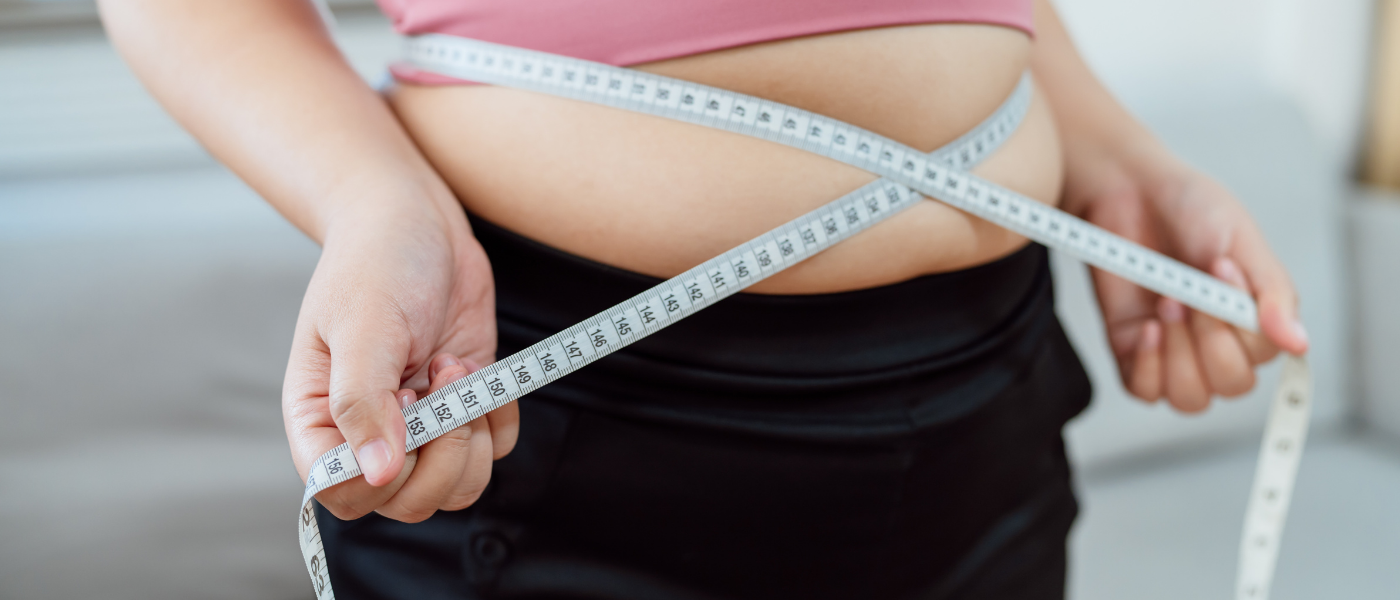
The second change is where the fat goes. This is the part women find most upsetting. The weight no longer settles gently on the hips and thighs. Instead it gathers around the middle, and much of it is visceral fat — the deep fat that wraps around your liver, pancreas and intestines. So many women tell me about a "menopause belly" that seemed to appear overnight, macam tiba-tiba, even when their overall weight hasn't changed dramatically. Unlike the fat just under your skin, visceral fat is metabolically active. It releases inflammatory signals that make your whole system harder to manage, which is exactly why this kind of belly fat deserves your attention.
The third change is rising insulin resistance. As estrogen falls, your cells respond less efficiently to insulin, the hormone that moves sugar out of your blood and into your cells for energy. When your cells resist insulin, your body simply makes more of it — and high insulin is a powerful signal to store fat, especially around the abdomen. This creates a frustrating loop: more visceral fat worsens insulin resistance, and worse insulin resistance lays down even more visceral fat. This loop is the real engine behind menopausal weight gain, and no amount of skipping meals can out-discipline it.
Here is the part of this conversation that I most want you to take seriously, gently but honestly. All that deep abdominal fat does not sit there harmlessly. It is strongly linked to fatty liver — a condition where fat builds up inside the liver itself. Fatty liver has quietly become one of the most common health concerns among women in midlife, and for years it can produce almost no symptoms at all. Many women only discover it by chance during a routine health screening or check-up. So that stubborn waistline isn't only a matter of how your clothes fit. It can be a quiet signal about your metabolic health on the inside. I share this not to frighten you, but so you can treat your changing body as information to act on, rather than as a personal failing to feel ashamed of.
So what actually works once you understand all this? The single most important shift is to protect and rebuild your muscle, because every bit of muscle you keep is metabolism you keep. That means resistance training — lifting, bands, bodyweight, senaman kekuatan — two or three times a week, paired with enough protein at each meal. It is far more powerful than hours of cardio paired with shrinking portions. It also helps to care less about the scale and more about your waist measurement and your strength; muscle is denser than fat, so the scale can stay still while your body changes shape. Keeping your blood sugar steady matters too, through balanced meals with protein, fibre and healthy fats rather than crash diets that spike insulin and leave you ravenous. And prioritising sleep is not a luxury — poor sleep alone worsens insulin resistance and cravings the very next day.
Finally, it helps enormously to support the hormonal shift sitting at the root of all of this, so your body isn't fighting an uphill battle. This is exactly why I formulated M+ Balance, which contains EstroG-100 — a clinically studied, halal-certified, plant-based extract that helps women navigate the hormonal swings of perimenopause and menopause more gently. M+ Balance won't override the natural process you're going through, but by helping your system feel steadier, it makes all of the habits above easier to sustain.
If you take one thing from this, let it be this: your metabolism isn't broken, and it certainly isn't punishing you for getting older. It's responding to a profound hormonal shift — and it responds beautifully when you give it the right inputs. You are not lazy, and you are not alone. You simply needed someone to explain the new rules of the game.
If you'd like to understand where you are on this journey, take my free Menopause Symptom Quiz, or try M+ Balance through the MPlus Tester Pack — a gentle, low-commitment place to begin. Your strongest, most energised years can still be ahead of you. Let's build them together.