

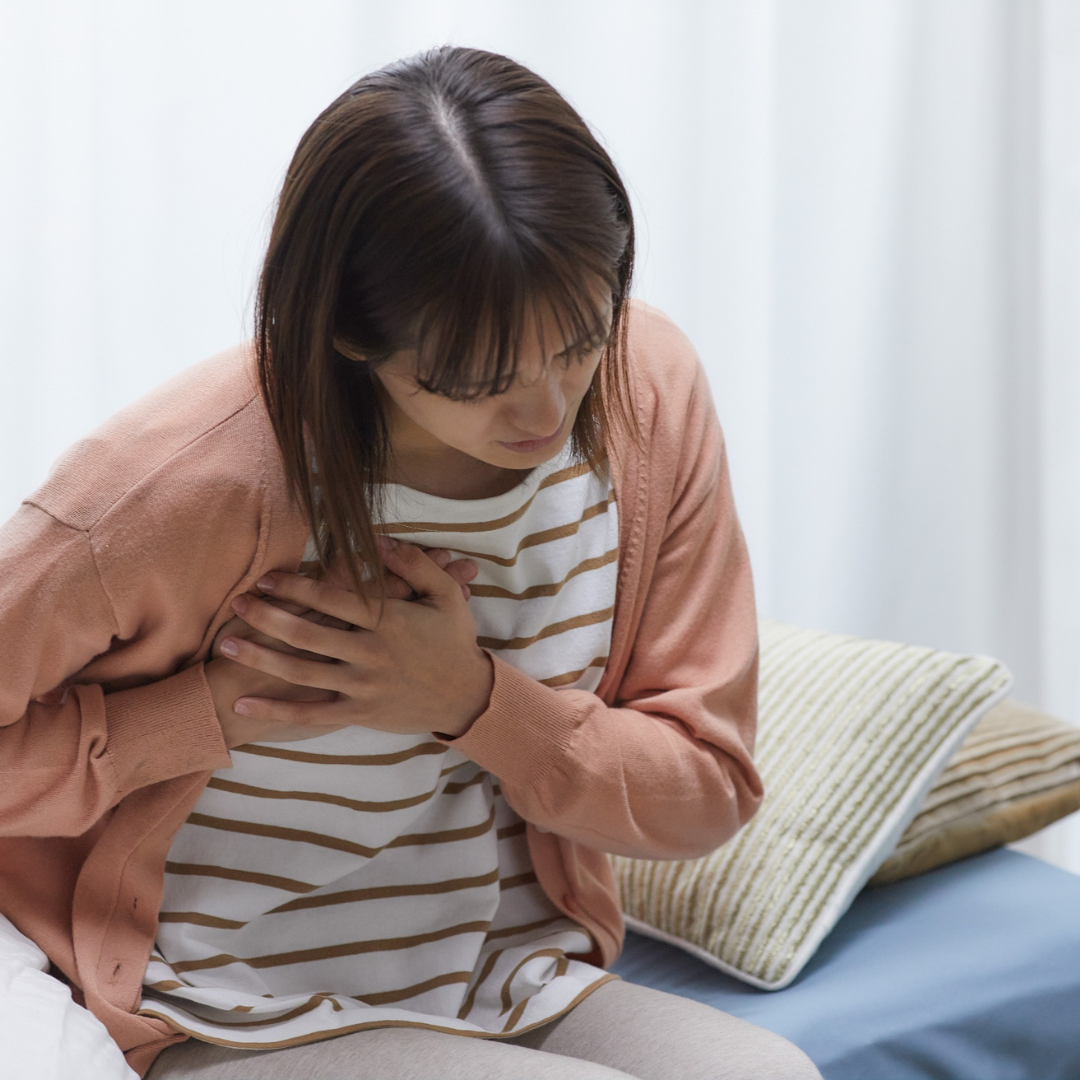
You're lying in bed at night when suddenly your heart starts racing. Or maybe you feel a strange fluttering in your chest — a chest palpitation that comes out of nowhere and leaves you unsettled, wondering if something is seriously wrong. Then the headache creeps in. You feel breathless doing things that never tired you before. You check your blood pressure and the numbers are higher than they used to be.
If you're in your 40s or 50s, and you're going through perimenopause or menopause, this is more common than you think. And it's not just in your head.
Menopause changes everything — including how your heart and blood vessels behave. Estrogen, which once helped keep your blood vessels flexible and your blood pressure stable, begins to decline. Without it, your arteries can become stiffer. Your nervous system becomes more reactive to stress. Your body holds onto sodium more easily. All of this creates the perfect conditions for high blood pressure, or what we call hipertensi, to quietly take root — even in women who have never had BP issues before.
This is why so many women are shocked to receive a hypertension diagnosis during or after menopause. They were healthy. They weren't overweight. They didn't eat badly. But their hormones shifted, and their cardiovascular system shifted with it.
Chest pains during menopause are another thing that doesn't get talked about enough. Sometimes it's musculoskeletal — your body changing shape and holding tension differently. But sometimes it's your heart telling you that your stress load has become too heavy to carry quietly. When estrogen drops, cortisol — your stress hormone — can rise more easily. Your body enters a state of low-grade tension that never fully switches off. That tension shows up as tight shoulders, disturbed sleep, and yes, a chest that feels heavy or tight even when you're resting.
Heart palpitations during menopause are often triggered by exactly this: a nervous system that has become sensitised. Hot flushes, anxiety, disrupted sleep — they all activate the same stress response. Your heart rate spikes. You feel your heartbeat in your throat. It passes, but it leaves you shaken. Most of the time, palpitations during menopause are not dangerous — but they are your body's way of saying it needs more support, not less.
So what actually helps?
The most powerful thing you can do is treat your stress as a medical priority, not a lifestyle complaint. Wanita kita sering abaikan ini — we dismiss our own stress as normal, as something to push through. But during menopause, unmanaged stress directly raises your blood pressure and worsens both palpitations and chest discomfort. A daily 30-minute walk isn't just good for your weight — it is one of the most evidence-backed ways to lower blood pressure naturally and calm a reactive nervous system. Breathing exercises and gentle yoga help your body move out of that chronic fight-or-flight state. Even spending time in nature — duduk kat taman, breathe slowly — has a measurable effect on cortisol levels.
Your diet matters more now than it ever did. Potassium-rich foods like bananas, coconut water, cucumber, and spinach actively help your body flush excess sodium and keep your blood pressure from climbing. Whole grains, healthy fats from nuts and seeds, and omega-3 rich foods like salmon support your cardiovascular system at a time when it needs extra care. What hurts you most is what you already suspect — too much salt, too much processed food, too much coffee when you're already anxious and heart-thumpy. Kurangkan sikit. You don't have to be perfect.
Sleep is also not optional. When women in menopause don't sleep well — and so many don't — blood pressure goes up, stress hormones go up, and heart palpitations become more frequent. Protecting your sleep is protecting your heart.
Certain herbs have been used for generations to support cardiovascular health. Garlic has well-documented blood pressure lowering effects. Hibiscus tea — roselle, which we already love here in Malaysia — has been shown in studies to meaningfully reduce systolic blood pressure. Ashwagandha helps lower cortisol, which in turn can calm a racing heart and reduce chest tension.
Here's what I want you to take away from this. Chest pains, heart palpitations, rising blood pressure — these are not just things that happen to older people or unhealthy people. They are things that happen to women in menopause because menopause is a genuine hormonal transition that affects every system in your body, including your heart. The worst thing you can do is ignore these signs. The second worst thing is to panic. What serves you is to understand what's happening, support your body with the right habits and nutrition, and get the right help.
If you're not sure where to start, take our free menopause quiz. It will help you understand exactly where you are in your transition and what your body needs right now. Because feeling stronger, calmer, and more in control of your health during menopause? That is absolutely possible — and it starts with knowing yourself better.