

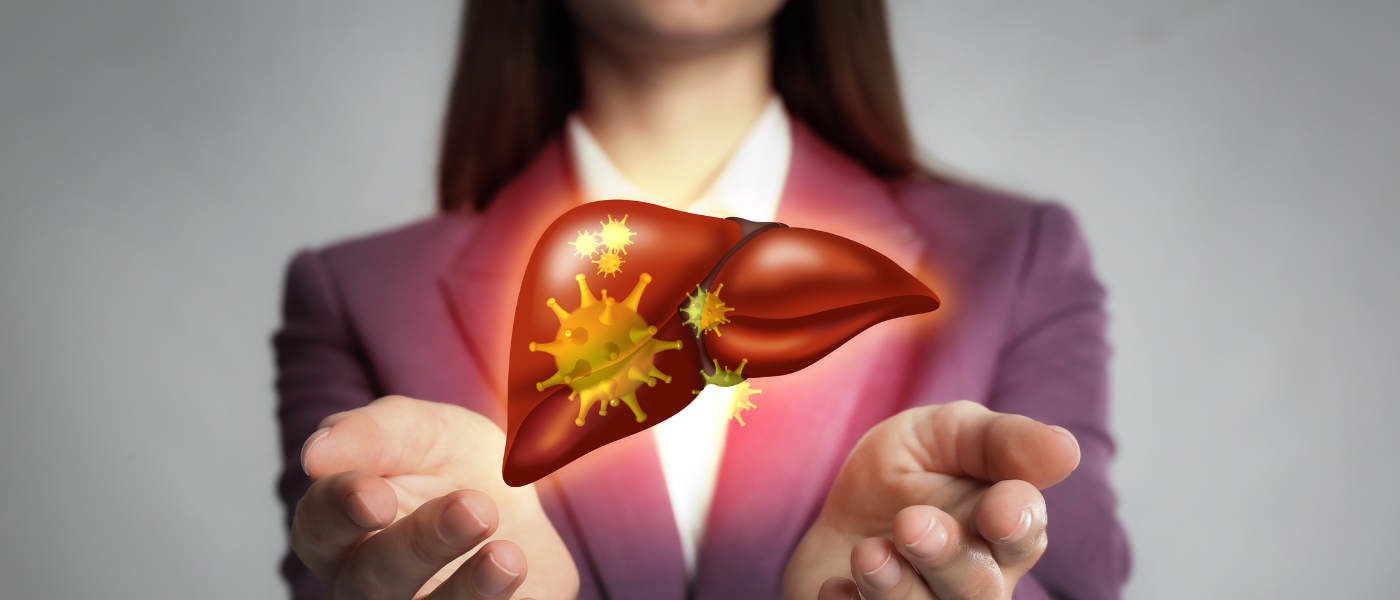
You did not change. That is the part that confuses so many women I speak to. You are eating the same way you did at 35. You are walking, you are trying, you are doing everything you have always done. And yet the scale creeps up, your tummy feels bloated and tight, your doctor mentions your liver enzymes are "a little high," and suddenly there is a phrase on your report you never expected to see: fatty liver. Non-alcoholic fatty liver disease, to be exact. And here is what almost nobody explains to you — this is not a punishment for something you did. It is very often a hormonal story.
Let me explain what is happening inside your body, because understanding it changes everything. For most of your life, estrogen has been quietly protecting your liver. It helps your body manage how fat is stored, how sugar is processed, and how insulin behaves. Estrogen is, in a sense, your liver's bodyguard. But as you move through perimenopause and into menopause, estrogen drops — not gently, but in waves that swing high and low before finally settling low. When that protection fades, your liver becomes far more likely to store fat instead of burning it. At the same time, your body becomes more resistant to insulin, meaning the sugar in your blood does not get used properly and gets converted into fat — and a favourite storage spot is the liver itself.
Then there is cortisol, your stress hormone. Midlife is rarely calm. You may be raising teenagers, caring for ageing parents, managing a career, and sleeping badly because of night sweats and that maddening 2am wakefulness. Chronically high cortisol tells your body to hold on to belly fat and pushes blood sugar up, which feeds the liver even more. Add a slowing thyroid, which is also common in midlife, and your metabolism quietens further. So you see — it is not laziness, it is not greed, it is biology. Your hormones stopped talking to each other the way they used to, and your liver started storing the fallout. This is why so many women develop fatty liver in their 40s and 50s despite never being heavy drinkers. The good news, and I want you to hold on to this, is that the liver is one of the most forgiving organs in your body. It can heal. Given the right conditions, it will heal.
So what can you actually do? After years of coaching Malaysian women through exactly this, here are the five things that make the biggest difference.
The first is to cut the sugar that hides in plain sight. I am not only talking about kuih and teh tarik, though yes, those count. I mean the sweetened drinks, the white rice piled high twice a day, the "healthy" cereals, the sauces. Fructose and refined carbohydrates are processed almost entirely by your liver, and excess goes straight into fat storage. You do not need to be perfect. Simply halving your sugar and swapping white rice for brown, or reducing your portion, gives your liver room to breathe. Within weeks, many women see their bloating ease.
The second is to build muscle, not just do cardio. Muscle is where your body burns sugar. As estrogen falls, you lose muscle faster, which is partly why insulin resistance worsens. You do not need a gym. Bodyweight squats while the kettle boils, carrying your groceries, two short strength sessions a week — this is enough to start. Muscle acts like a sponge for blood sugar, pulling it away from your liver. This single shift is one of the most powerful things a midlife woman can do, and it is free.
The third is to protect your sleep fiercely. I know how hard this is when night sweats wake you and your mind races at 2am. But poor sleep raises cortisol and insulin resistance the very next day, which directly feeds fatty liver. Treat sleep as medicine, not a luxury. A cool dark room, no screens an hour before bed, and addressing the hormonal night sweats at the root rather than just enduring them. When women finally sleep properly, the changes in their bloodwork can be remarkable.
The fourth is to support your hormones intelligently. Because so much of fatty liver in midlife is driven by falling estrogen and the chaos that follows, supporting your hormones gently can ease the whole cascade. This is where plant-based support like EstroG-100 comes in — a clinically studied, Halal-certified botanical blend that helps soften menopausal symptoms without the harshness many women fear. When your hormonal swings calm down, your sleep improves, your cravings settle, your stress eases, and your liver gets a fighting chance. It is not magic; it is removing one of the biggest drivers of the problem.
The fifth is to move your body daily, even gently. You do not need to punish yourself. A brisk 30-minute walk after dinner does something quietly powerful — it helps your muscles soak up the sugar from your meal before your liver has to deal with it. Walk with a friend, walk while you talk on the phone, walk around the neighbourhood after maghrib. Consistency beats intensity every single time. The woman who walks every day will heal faster than the woman who runs hard once a week and then collapses.
Here is what I most want you to take away. A fatty liver diagnosis in midlife is not the end of the road — it is your body waving a flag, asking for support during a season of enormous change. You are not broken. Your hormones are simply renegotiating, and your liver got caught in the middle. With these five steps, women reverse this condition all the time, often within months. I have watched it happen again and again.
If you are not sure where to begin, take my free menopause symptom quiz — it will show you which of your symptoms are hormone-driven and where to focus first.