

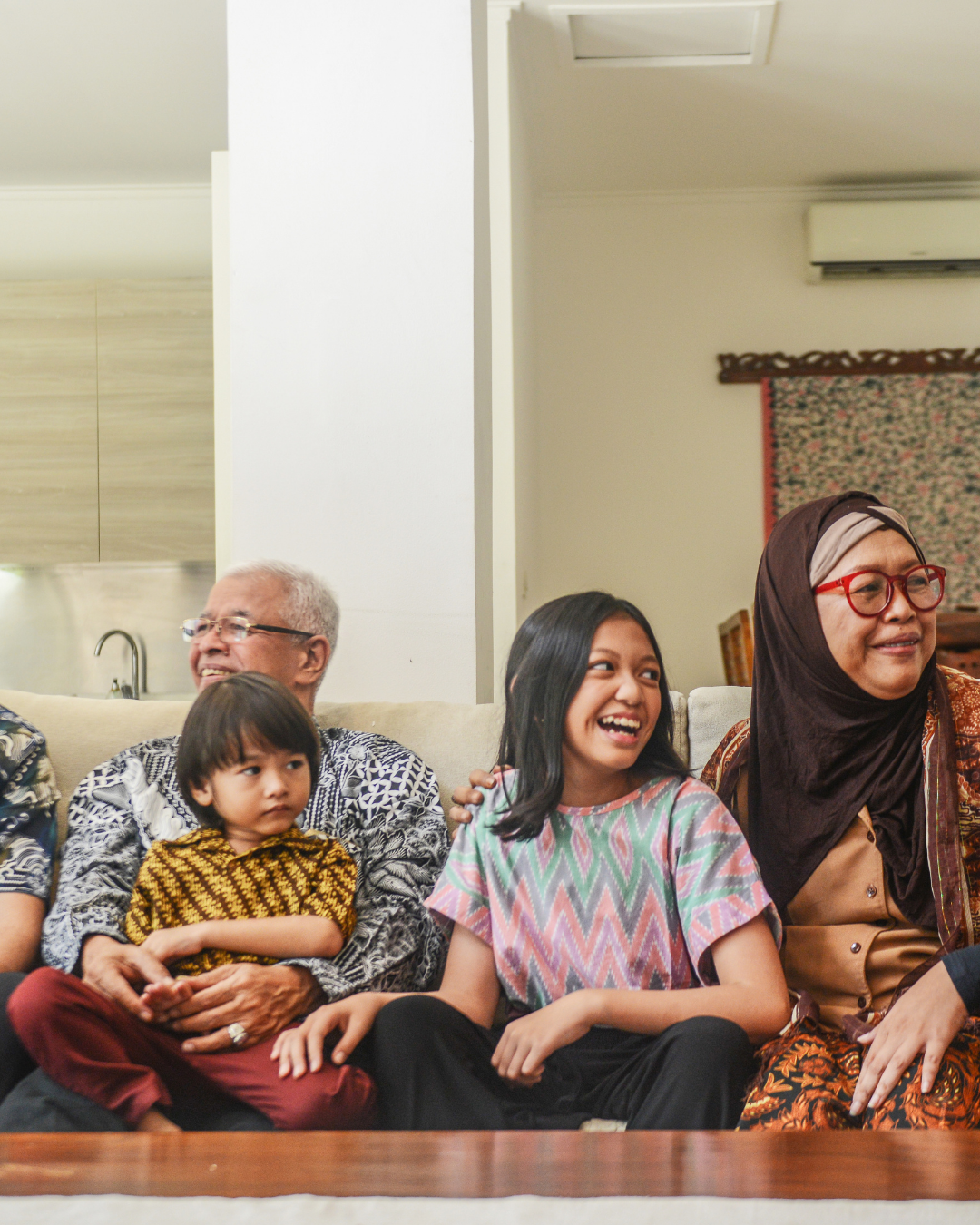
There was a time when Amina felt like the heart of her home. She remembered laughter filling the kitchen, her daughter eagerly sharing stories, and her husband teasing her gently across the dinner table. Life wasn’t perfect, but it felt warm, safe, and connected. Then slowly, almost without warning, something began to shift. At first, it was subtle. Amina felt letih all the time—not just physically tired, but emotionally drained. She began forgetting small things, losing her words mid-sentence, and feeling overwhelmed by conversations that once brought her joy. Her patience grew thin, and she found herself snapping at the people she loved most, only to retreat into guilt and silence afterward.
What troubled her the most was not just the change, but the confusion. She didn’t understand why she was becoming this version of herself. The daughter she once listened to with full attention now felt like noise. Her husband’s simple questions felt like pressure. Meals became quiet. Conversations faded. And in the stillness of her room, she began asking herself, “Why am I becoming like this?” What Amina did not realise was that her body was undergoing a powerful transition. During perimenopause and menopause, hormonal shifts—especially changes in estrogen and progesterone—affect not just the body but also brain chemistry. These hormones influence neurotransmitters like serotonin, which regulate mood, sleep, and emotional balance. Research supported by organisations such as North American Menopause Society shows that women in this stage are more vulnerable to mood disturbances, including anxiety and muram. But Amina didn’t see biology at work. She saw personal failure.
At the same time, there was another layer she had long ignored. Beneath the surface, Amina was carrying years of unprocessed emotional pain—the loss of a parent, the pressure of always being strong, and the quiet grief she never gave herself permission to feel. Menopause didn’t create this pain; it amplified it. It brought buried emotions to the surface, intensifying reactions to everyday moments. When her daughter responded with a hint of impatience, it felt like rejection. When her husband grew quiet, it felt like distance. Without realising it, Amina began building walls—not because she didn’t love them, but because she didn’t know how to reconnect with them anymore.
Over time, disconnection became the new normal. Her daughter stopped sharing, sensing the emotional distance. Her husband stopped asking, unsure of how to reach her. The home that once felt alive now felt peaceful but cold. Amina told herself this was just part of life, that maybe this was what growing older looked like. But deep inside, there was an ache that wouldn’t go away. What she missed most was not energy or even happiness—it was connection. The feeling of being seen, heard, and understood.
One quiet afternoon, something shifted. It wasn’t dramatic or overwhelming. There was no breaking point, just a moment of honest reflection. Amina looked at herself and realised she no longer recognised who she had become—not in appearance, but in spirit. For the first time, instead of blaming herself, she asked a different question: “What if I don’t have to go through this alone?” That single question opened a door she didn’t know existed.
Taking the first step was not easy. The idea of speaking to someone, of opening up, felt uncomfortable and unfamiliar. She wondered if anyone would truly understand what she was experiencing. But she decided to try. She reached out to a coach, not because she had clarity, but because she needed a space to be heard. In that space, something powerful began to unfold. She was not judged. She was not dismissed. She was listened to with compassion and understanding.
Through those conversations, Amina began to see her situation differently. She wasn’t too emotional or failing as a mother or partner. She was navigating a transition—one that was both biological and emotional. She began to understand that what she was experiencing was not a sign of weakness, but a signal for awareness and healing. This shift in perspective became a turning point. When she stopped seeing herself as broken and started seeing herself as evolving, something within her softened.
Healing did not happen overnight, but it began with small, intentional changes. Amina started learning to name her emotions instead of reacting impulsively. She allowed herself to say, “I feel overwhelmed,” or “I feel tired,” without judgment. These simple acknowledgments helped her create space between her feelings and her reactions. Slowly, she began reaching out instead of withdrawing. One evening, she sat with her daughter and spoke honestly. She apologised for being distant and shared that she was trying to understand what she was going through. It wasn’t a perfect conversation, but it was real, and it opened a door that had long been closed.
With her husband, she took a similar step. Instead of expecting him to understand without explanation, she shared her experience openly. She told him she didn’t feel like herself and needed his support. That vulnerability allowed him to reconnect with her in a way that silence never could. In time, the distance that once felt unbridgeable began to close.
Scientific research supports what Amina experienced. Emotional connection and open communication play a crucial role in mental well-being. Studies from institutions like Harvard Medical School show that strong social connections can help regulate stress hormones such as cortisol and improve emotional resilience. For women going through menopause, this connection becomes even more important, serving as an anchor during a time of internal change.
Amina’s journey is one that many women silently experience. The combination of hormonal shifts, emotional stress, and unresolved trauma can create a heavy burden, often carried alone. Many believe they must push through quietly, managing everything without support. But the truth is, strength is not found in silence. Strength is found in the willingness to seek help, to open up, and to allow others to walk alongside you.
If any part of Amina’s story feels familiar, it may be an invitation to pause and reflect. Feeling distant, overwhelmed, or emotionally drained does not mean something is wrong with you. It may simply mean something within you needs attention, care, and understanding. Sometimes, the most powerful step is not a big change, but a small, honest conversation—with yourself or with someone who can guide you.
Amina did not find her way back all at once. It happened gradually, through awareness, connection, and support. But what she discovered along the way was this: she was never alone, and she was never broken. She was simply learning how to reconnect—with her family, with her emotions, and most importantly, with herself.