

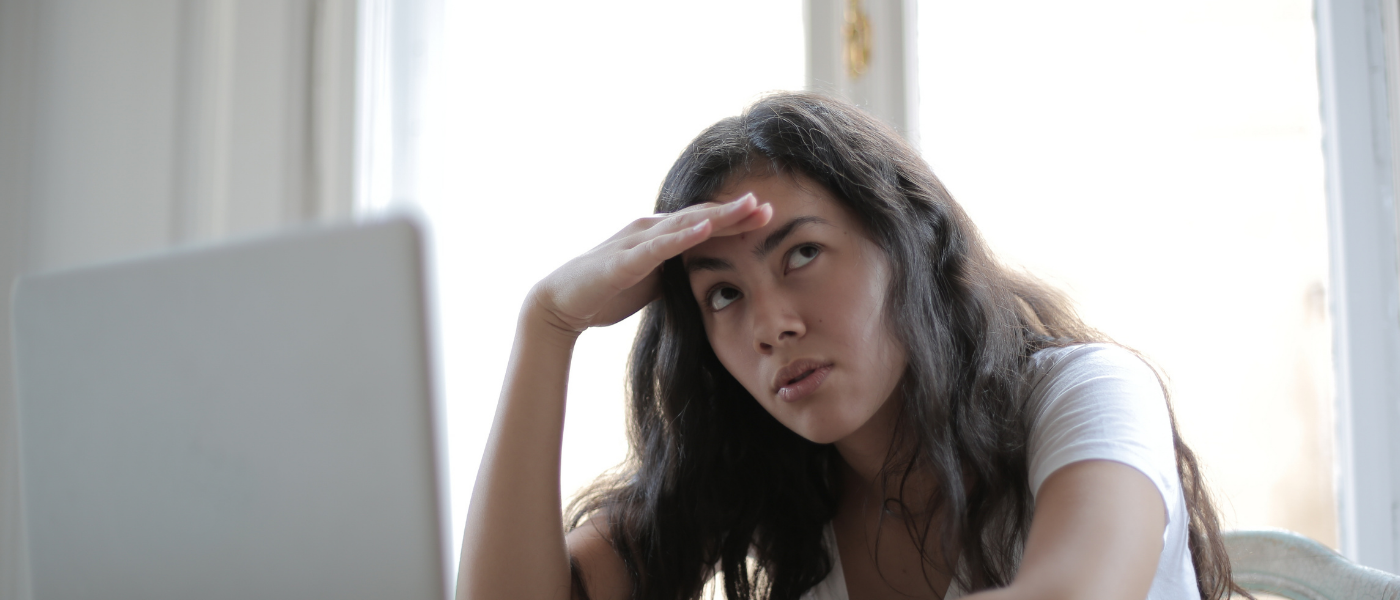
If you've been lying awake at 2am wondering why your body suddenly feels like a stranger's, you are not alone — and you are not imagining it. One of the most-searched questions among women in their 40s is also one of the most confusing: what is the difference between perimenopause and menopause? Most women use the two words as if they mean the same thing. They don't. And understanding the difference is the first step to feeling like yourself again.
Let's start with the simplest way to think about it. Perimenopause is the journey. Menopause is the destination — a single point you only recognise after you've already arrived. Peri means "around", so perimenopause is the stretch of time around the end of your reproductive years, when your hormones begin to shift. This phase often begins quietly in your early-to-mid 40s, sometimes even late 30s, and it can last anywhere from a few years to a decade. During this time you are still having periods, but they may become irregular — closer together, further apart, heavier, lighter, unpredictable. Behind the scenes, your estrogen and progesterone are no longer rising and falling in a steady rhythm. They swing. And it is those swings, not low hormones alone, that drive most of the symptoms women describe as "the change".
Menopause itself is not a phase at all. It is a single milestone: the day you have gone twelve full months — satu tahun penuh — without a period. You can only confirm it looking backwards. The average age for a Malaysian woman to reach menopause is around 49 to 51. Once you pass that twelve-month mark, you are technically postmenopausal for the rest of your life. So when a woman says "I'm going through menopause", what she is almost always describing is perimenopause — the years of symptoms leading up to that final marker.
This distinction matters because of when the hard symptoms actually appear. Many women assume the worst arrives at menopause. In reality, perimenopause is usually when the body feels most chaotic, precisely because hormones are fluctuating rather than simply settling low. This is the season of hot flushes — that sudden wave of heat that climbs up your chest and neck, leaving you flushed and damp, sometimes followed by a chill. We call it rasa panas or kepanasan, and it can strike in a meeting, at the pasar, or in the middle of the night as drenching night sweats. For some women it is a mild nuisance; for others it disrupts daily life for years.
Then there are the joint pains — the ache that creeps into your knees, fingers, shoulders and hips, often worst in the morning when you first get out of bed. So many women tell me, "Saya rasa sakit sendi macam orang tua, but I'm only 45." This is real, and there is science behind it. Estrogen helps keep your joints lubricated and reduces inflammation, so as levels swing and decline, sakit sendi and stiffness become some of the most common — and most overlooked — symptoms of this stage. It is not simply "getting old". It is hormonal.
And perhaps the most exhausting symptom of all is the lack of sleep quality. This is not just trouble falling asleep. It is waking at 3am wide-eyed, heart racing, unable to drift back off. It is susah tidur night after night, sometimes triggered by night sweats, sometimes by the anxiety and racing thoughts that perimenopause can bring. Poor sleep then feeds everything else — the kurang tidur makes the brain fog heavier, the moods shorter, the joint pain harder to tolerate. Many women don't connect their broken sleep to their hormones at all, and so they suffer quietly, blaming stress or age.
Alongside these three, perimenopause can bring a whole constellation of changes: mood swings and irritability, kabut otak or brain fog, weight gain around the middle that won't budge no matter how carefully you eat, vaginal dryness, lower libido, thinning hair, and a heart that sometimes pounds for no reason. No two women experience it the same way. You might have all of these, or only one or two. That unpredictability is exactly what makes perimenopause so disorienting — and why so many women feel dismissed when they're told it's "just stress".
Here is what I most want you to take away: this transition is natural, but suffering through it in silence is not something you simply have to accept. Once you understand that your hot flushes, your joint pains, and your lack of sleep quality are connected — all rooted in the same hormonal shift — you can finally start supporting your body in a targeted way rather than chasing each symptom separately.
That is exactly why I formulated M+ Balance. It contains EstroG-100, a clinically studied, plant-based extract that helps the body manage these hormonal swings more gently — easing rasa panas, calming the restlessness that steals your sleep, and helping you feel steadier through the day. It is halal-certified, because I know that matters to so many of us here in Malaysia, and it's made for women who want real support without synthetic hormones. M+ Balance won't stop the natural process of perimenopause, but it can soften the ride so you feel less at the mercy of your own body.
So if you take one thing from all of this, let it be this: perimenopause is the years of change, menopause is a single day you mark in hindsight, and the symptoms you're feeling right now are real, common, and manageable. You don't have to push through alone, and you certainly don't have to pretend everything is fine when you're lying awake at 2am.
If you're not sure where you are on this journey, take my free Menopause Symptom Quiz to understand what your body is telling you — and if you'd like a gentle place to start, the MPlus Tester Pack lets you try M+ Balance without a big commitment. Your forties and fifties can be some of the most grounded, confident years of your life. Let's make sure your body comes along for the ride.