

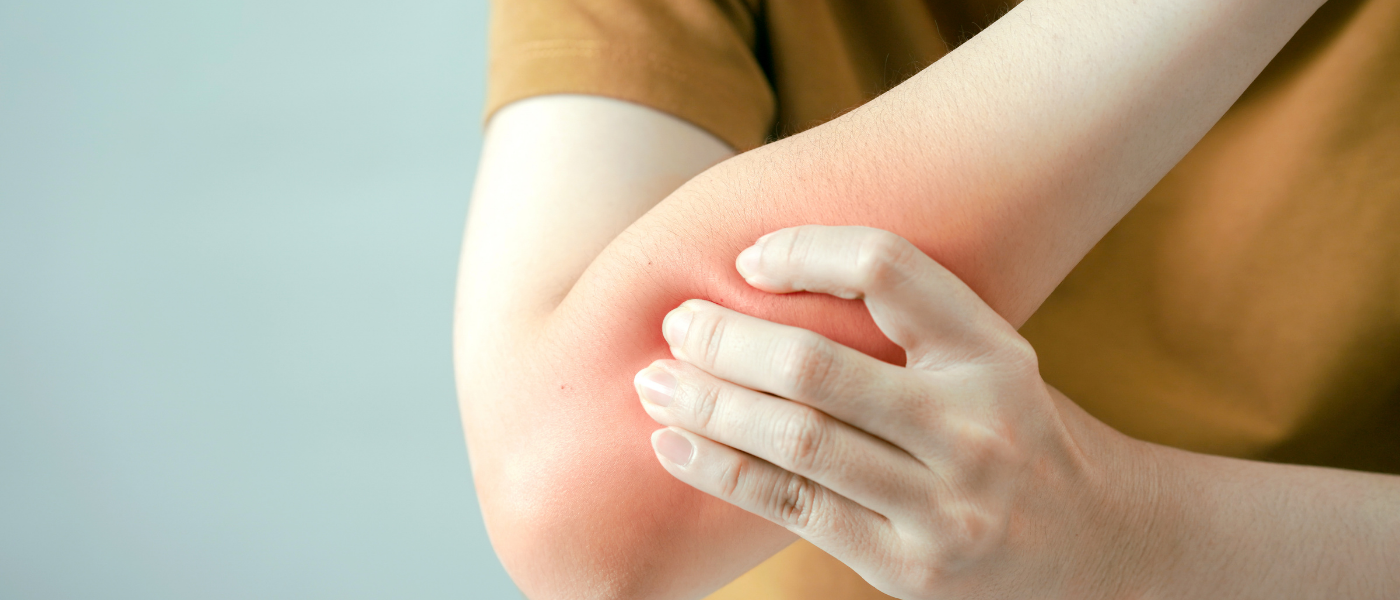
You didn't run a marathon. You didn't even do that ambitious HIIT class you keep telling yourself you'll try. You just got up from the sofa like a normal human being, and somehow your knees announced it to the whole room with a creak loud enough for your husband to ask, "Are you okay?"
Or maybe it's your fingers — stiff and achy first thing in the morning, like you've been gripping something all night. Or your hips, which decide the moment you sit down for too long that they simply will not cooperate when you try to get back up.
If this is you lately, first things first: you are not "just getting old," and you are definitely not imagining it. Joint pain and stiffness during perimenopause and menopause is one of the most under-discussed symptoms out there — everybody warns you about hot flashes, nobody warns you that your knees might start filing complaints too. This is one of the things women in our Hormone Reset community bring up constantly, usually a little sheepishly, as if creaky joints in your 40s and 50s is somehow a personal failing. It isn't. Let's talk about what's actually going on, and — more importantly — what you can do about it.
Wait, Is Joint Pain Actually a Perimenopause Thing?
Yes — genuinely, yes. This isn't a coincidence of getting older at the same time your hormones happen to be shifting. There's a real, documented hormonal mechanism behind it, and researchers even have a name for it: menopausal arthralgia. Studies estimate that joint pain affects somewhere between 50 and 70% of women during the menopause transition, making it one of the most common — and most commonly dismissed — symptoms of this stage of life.
Doctors sometimes call it musculoskeletal syndrome of menopause, which is a fancy way of saying: your hormones, your joints, your muscles, and your connective tissue are all having a conversation, and right now it's not a particularly pleasant one.
So Why Do My Joints Suddenly Hate Me?
Here's where the "knowledgeable when it matters" part comes in, so bear with me for a moment.
Estrogen isn't just about your cycle or your mood — it's deeply involved in joint health too. It helps regulate inflammation throughout the body, keeps cartilage (the cushioning between your bones) healthy and hydrated, and supports the production of collagen, the protein that gives your tendons, ligaments, and connective tissue their strength and elasticity.
When estrogen starts its unpredictable perimenopausal rollercoaster — rather than gently tapering off — a few things happen at once:
- Inflammation creeps up. Estrogen has natural anti-inflammatory properties. As levels fluctuate and eventually decline, inflammatory markers in the body tend to rise, and joints are often where that inflammation shows up first.
- Cartilage loses some of its cushioning. Estrogen receptors exist in cartilage tissue itself, and lower estrogen is associated with faster cartilage breakdown and reduced joint lubrication — which is part of why joints can feel stiffer, especially first thing in the morning.
- Collagen production slows down. Some research suggests women can lose a meaningful percentage of their skin and connective tissue collagen in the years around menopause, and that same collagen decline affects tendons and ligaments supporting your joints, not just your skin's bounce.
Add in the fact that many women also experience some weight redistribution, reduced muscle mass, and changes in activity levels around this time, and you've got a joint under more mechanical load with less cushioning and support to handle it. No wonder your knees are filing a complaint.
Is It Just Aging, Then, Or Really Menopause?
Fair question — and one worth asking your doctor if you're unsure, because the two can overlap and it's worth ruling things out. General age-related wear (osteoarthritis) tends to be more localized, progressive over years, and linked to specific joints that have taken the most impact over your lifetime. Menopause-related joint pain, on the other hand, often shows up more suddenly, more symmetrically (both hands, both knees), and frequently arrives alongside other perimenopause symptoms — hot flashes, sleep disruption, mood changes — around the same window of time.
If your joint pain came on relatively quickly, in your 40s or early 50s, and arrived as part of a bigger cluster of "wait, what is happening to my body" symptoms, hormones are very likely playing a starring role.
When Should You Get It Checked?
Most perimenopausal joint pain is uncomfortable but not dangerous, and tends to improve with the right support. That said, please see your doctor if you notice:
- Significant joint swelling, redness, or warmth (not just achiness)
- Pain that's isolated to one joint and getting progressively worse
- Symptoms alongside unexplained fatigue, rashes, or fever
These can point to inflammatory arthritis or other conditions that mimic menopausal joint pain but need a different kind of care — worth ruling out so you can treat the right thing.
What Actually Helps (Beyond "Just Take Painkillers")
Popping an anti-inflammatory every time your knees complain isn't a long-term plan, and it doesn't touch the root cause. Here's what the research — and what I've seen work again and again with women in our Hormone Reset community — actually points to.
1. Anti-inflammatory, plant-forward eating
A diet rich in colourful vegetables, fatty fish or algae-based omega-3s, and phytoestrogen-rich foods (think flaxseed, tempeh, edamame) helps calm the general inflammatory load your body is dealing with. Turmeric, in particular, has decent research behind it for easing joint achiness — the curcumin in it is a genuine anti-inflammatory compound, not just a trendy spice.
2. Keep moving — gently, consistently
I know, achy joints and "go exercise more" sound like a contradiction. But joints are a bit like doors — they need to be opened regularly or the hinges seize up. Low-impact movement (swimming, walking, yoga, cycling) keeps synovial fluid circulating and actually reduces stiffness over time, even though the first five minutes might feel like convincing a rusty gate to swing open.
3. Support collagen production
Since declining estrogen slows your body's natural collagen production, giving it building blocks (vitamin C-rich foods, collagen-supportive nutrients) can help offset some of that loss in tendons and ligaments, not just skin.
4. Address the hormonal root, not just the symptom
This is the piece that often gets skipped. Since fluctuating estrogen is a genuine driver of joint inflammation and cartilage changes, supporting hormonal balance holistically — through food, lifestyle, and targeted natural support — tends to ease joint symptoms alongside the hot flashes, mood swings, and sleep issues that usually show up in the same season of life. This is exactly the approach we take with MPlus Balance, which uses EstroG, a plant-based, non-hormonal ingredient that supports the body's natural hormonal balance rather than masking one symptom at a time. It's not a joint pain cure on its own — no supplement honestly is — but many women find that when their overall hormonal picture steadies, the aches ease up as part of that bigger shift.
5. Don't underestimate sleep
Poor sleep (often disrupted by night sweats around this same time) raises inflammatory markers throughout the body, joints included. Improving sleep quality is one of the most underrated joint-pain interventions there is.
The Bottom Line
Your joints aren't betraying you, and you're not falling apart — your hormones are going through a genuine, biological transition, and your body is asking for a bit more support than it used to need. That's not a design flaw. It's just information, and it's actionable information at that.
If your mornings have started with more creaking than you'd like, and you suspect your hormones might be behind more than just your joints, it might be worth taking a step back and looking at the whole picture rather than treating each ache in isolation. Take our quick quiz at www.mplusmenopause.com to find out what your body actually needs right now — or if you're curious about the plant-based approach behind easing symptoms like this one, take a look at MPlus Balance and see what you think. Your knees might just thank you.