

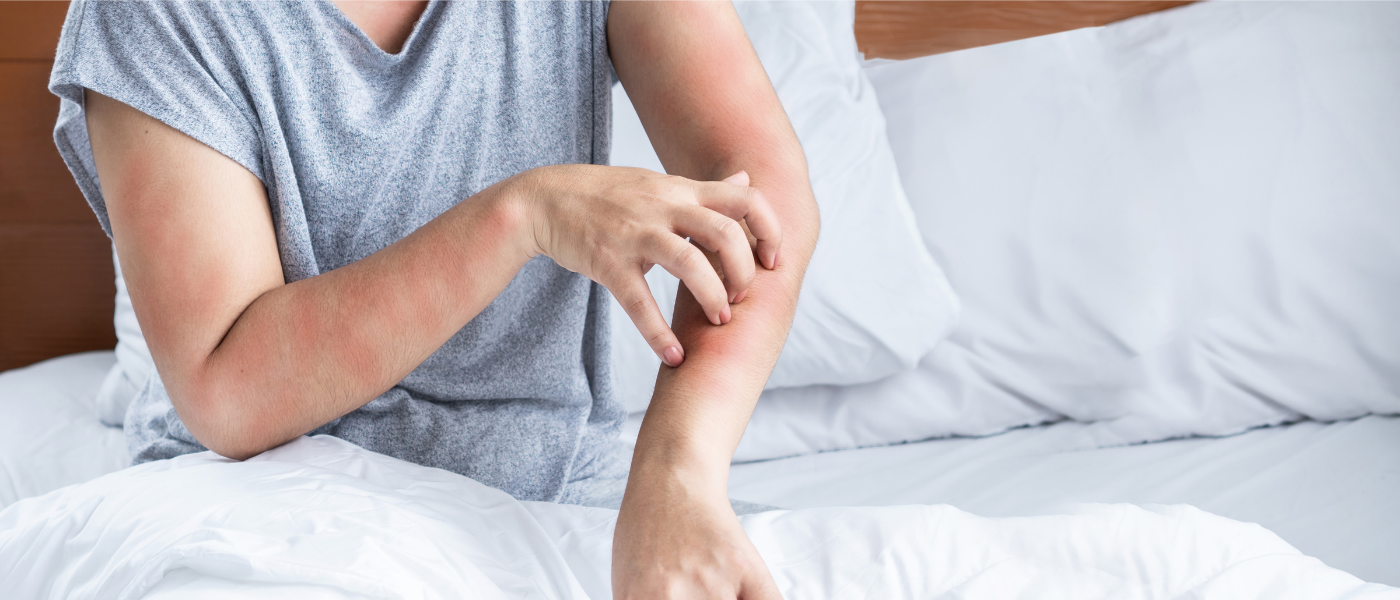
You did your usual skincare routine this morning — same cleanser, same moisturiser you've used for years — and your skin still felt tight by lunchtime. Your foundation sits differently. There's a new crease by your mouth that definitely wasn't there last year. And out of nowhere, your arms and shins have started itching for no reason at all, like your skin just decided to file a complaint.
If this is you, I want you to hear this first: it's not your imagination, and it's not "just what happens after 45." Something real, measurable, and hormonal is going on underneath the surface — and once you understand it, you can actually work with it instead of just staring at your bathroom mirror feeling betrayed by your own face.
Wait, Is This Actually Tied to Menopause?
Yes — and the numbers on this are honestly more dramatic than most women expect. Research shows women lose up to 30% of their skin's collagen in just the first five years after menopause, with collagen continuing to decline at roughly 1-2% per year after that. One of the foundational studies on this, published decades ago in the British Medical Journal, found that postmenopausal women on estrogen therapy carried 48% more skin collagen than untreated women the same age. That's not a subtle difference — that's your skin's entire structural framework changing.
So no, you didn't imagine that your skin "changed overnight" somewhere around perimenopause. In a lot of ways, it genuinely did.
So What's Actually Happening Under There?
Estrogen isn't just a reproductive hormone — it has receptors all through your skin, in both the epidermis (the surface layer) and the dermis (the deeper structural layer). When estrogen is doing its job, it supports collagen production, helps skin hold onto water, maintains the oil production that keeps your skin barrier intact, and even plays a role in wound healing and nerve sensitivity.
As estrogen declines through perimenopause and menopause, several things happen at once:
Collagen breaks down faster than it's replaced. Estrogen helps regulate the balance between collagen synthesis and collagen breakdown. When estrogen drops, synthesis slows down while breakdown continues — and the skin's underlying scaffolding starts thinning, which shows up as new fine lines, looser skin, and less "bounce" when you press it.
Your skin loses its grip on water. Estrogen supports the glycosaminoglycans (say that five times fast) — the hydrophilic, water-loving molecules in your skin that keep it plump and dewy. Less estrogen means less water retention, which is why moisturiser that used to be enough suddenly isn't cutting it anymore.
The itching is real, too. Declining estrogen affects your skin's barrier function and can trigger histamine-related responses, which is part of why so many women report new, unexplained itchiness — sometimes called "menopausal pruritus" — with no rash, no new soap, no obvious cause.
Oil production drops. Sebum production is also estrogen-dependent, which is why skin that used to run oily can suddenly feel tight, flaky, or just plain dry — even in people who never had dry skin in their life before this.
This is usually the point where I tell my Hormone Reset clients: your skin isn't failing you, and it isn't "just getting older" in some vague, inevitable way. It's responding, quite precisely, to a hormonal shift — which actually means there's a lot you can do about it.
Why It Feels Like It Happened So Fast
A lot of women describe skin changes in menopause as sudden rather than gradual — and there's a reason for that. Because that first five-year window after menopause is when collagen loss is steepest (that 30% drop happens fast, not slowly over decades), the change can genuinely feel like it arrived overnight, even though it's a real, well-documented biological curve rather than a random glitch.
When Is It Worth Getting Checked?
Most menopausal skin changes — dryness, thinning, itching, loss of elasticity — are uncomfortable but not dangerous, and respond well to the right support. That said, see a doctor if itching is severe, comes with a rash, welts, or hives, or if you notice unusual skin changes like new moles, sores that won't heal, or unexplained bruising — these deserve a proper look to rule out other causes rather than being chalked up to hormones by default.
What Actually Helps — Beyond "Just Moisturise More"
A thicker cream helps at the surface, but a lot of what's happening here starts deeper than skincare alone can reach. Here's what the research — and what I've seen work again and again with women in our Hormone Reset community — actually supports.
Feed your skin from the inside, not just the outside. Omega-3 fatty acids (walnuts, chia, flaxseed, algae-based supplements) support your skin's barrier function and help manage the inflammation that worsens dryness and itching. Antioxidant-rich foods — berries, leafy greens, colourful vegetables — help protect existing collagen from further breakdown caused by oxidative stress.
Consider phytoestrogens. This is where it gets genuinely interesting: research on plant compounds like isoflavones (found in soy, chickpeas, and other legumes) shows they can support collagen synthesis and skin hydration by gently interacting with estrogen receptors in the skin. One randomized controlled trial found that soy protein containing isoflavones measurably improved skin hydration and photoaging signs in postmenopausal women over several months. It's not an overnight fix, and it's not a replacement for medical care if you need it — but it's a genuinely promising, food-first lever worth knowing about.
Don't skip protein. Collagen is, quite literally, a protein — your body needs a steady supply of amino acids (especially from plant sources like legumes, tofu, and tempeh) plus vitamin C to actually build new collagen, not just lose the old kind.
Hydrate consistently, not just when your skin feels dry. Water intake affects skin hydration from the inside, and it works best paired with a barrier-supporting moisturiser on the outside, rather than instead of one.
Be patient and consistent. Collagen turnover isn't fast. Most nutrition-based approaches take 8-12 weeks of consistency before you'll notice a real difference — which is longer than we'd all like, but it's also how you know it's working with your biology, not against it.
This is exactly the kind of shift where a plant-based, hormone-supportive approach can genuinely support what's happening under the surface — not by masking the transition, but by giving your body the raw materials it needs to adapt to it well. It's part of why we formulated our Menoplus range around ingredients that support hormone balance holistically, skin included, rather than treating it as a separate problem from everything else going on in perimenopause.
Your Skin Isn't Betraying You — It's Adapting
Menopausal skin changes are real, well-documented, and driven by biology, not a personal failing or a sudden loss of discipline in your skincare routine. Collagen loss, dryness, and itching all have a genuine hormonal explanation — and, encouragingly, they also have genuine, research-backed ways to respond.
If your skin has been feeling like it belongs to someone else lately, you don't have to just accept it and move on. Take our quick quiz at [www.mplusmenopause.com](https://www.mplusmenopause.com) to find out what your body actually needs right now — because supporting your skin through this transition starts from the inside, and it's never too late to start.