

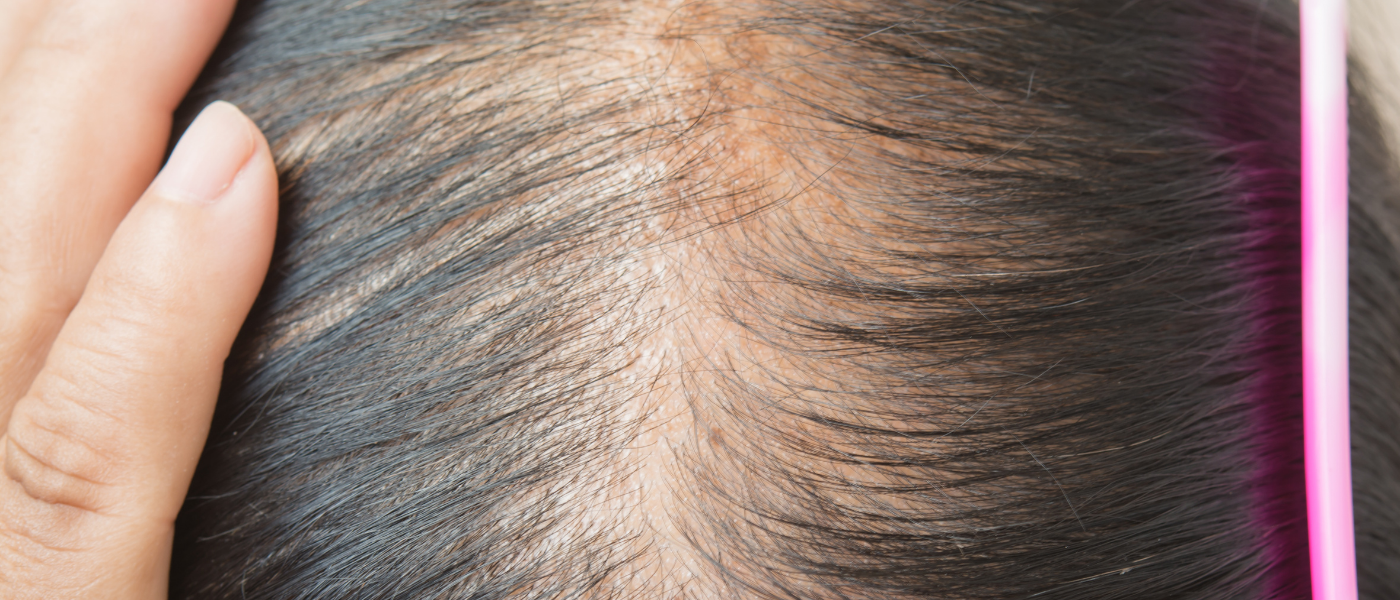
You've had the same hair type your whole life. Then one day, you're wrapping your ponytail holder around twice — a third time, even — and it still feels loose. Or you're standing in the shower watching more hair swirl down the drain than seems, well, normal. You check your part in the mirror and swear it's wider than it used to be. Kalau ini kau, you're not imagining it, and you're definitely not going bald overnight, lah. Something real is going on, and it deserves a proper explanation, not just "it's genetics" or "it's just aging."
This is one of the quieter symptoms of the menopause transition — nobody warns you about it the way they warn you about hot flashes, but it hits a huge number of women, and it can be genuinely upsetting because hair feels so tied to how we see ourselves. So let's talk about why it happens, and — more importantly — what you can actually do about it.
Wait, Is Menopause Hair Thinning Actually This Common?
Yes — far more common than most women expect. Research shows up to 50% of women notice visible hair thinning during perimenopause, and that number climbs even higher after menopause, with some studies putting postmenopausal hair loss at around 50 to 80% of women. Female pattern hair loss — the gradual widening of the part and overall reduced density, rather than sudden bald patches — typically starts around or after menopause for most women who experience it.
Here's the part that tends to bring relief to my clients: this isn't a sign that something is uniquely wrong with you. It's a well-documented, hormonally-driven pattern that affects roughly one in two women going through this transition. You've just landed in very good, very ponytail-frustrated company.
So What's Actually Happening Up There?
Estrogen does more for your hair than most of us ever realize. It helps keep hair follicles in the anagen (growth) phase for longer, and it also plays a protective role — shielding your follicles from the effects of androgens (male-pattern hormones like testosterone), which every woman has some of, just usually kept in check by estrogen.
During perimenopause and menopause, estrogen and progesterone decline — while androgen levels tend to stay relatively steady. That shift in the *balance* between the two, rather than androgens rising on their own, is what tips things in favour of thinning. With less estrogen around to protect them, hair follicles become more sensitive to androgens, the growth phase shortens, more hairs shift into the shedding phase at once, and new strands that grow back are often finer than before. That's why the change often feels less like "losing patches of hair" and more like "my hair just isn't as thick as it used to be" — reduced density rather than dramatic loss, at least in the earlier stages.
A few other usual suspects tend to pile on and make things worse:
- Iron deficiency / low ferritin — very common in midlife women, and strongly linked to increased shedding
- Thyroid changes — thyroid function can shift during this life stage and directly affects hair growth cycles
- Chronic stress— can push more hairs into the shedding phase (a pattern called telogen effluvium)
- Nutritional gaps — inadequate protein, biotin, zinc, or B12 all show up in hair health before they show up anywhere else, since hair follicles are metabolically "optional" tissue your body deprioritizes first when resources are tight
This is usually the point where I tell my Hormone Reset clients: your hair isn't failing you. It's a very honest messenger, reporting on what's happening with your hormones and your nutrition — which actually makes it one of the more responsive symptoms once you address the right inputs.
When Is It Worth Getting Checked?
Most menopausal hair thinning is gradual, diffuse (spread evenly), and tied to the hormonal shifts above. That said, it's worth seeing your doctor if you notice sudden clumps of hair loss, distinct bald patches, thinning that's unusually rapid, or thinning alongside other symptoms like fatigue, cold intolerance, or unexplained weight changes — these can point to thyroid issues or iron deficiency, both very treatable once identified, and both worth ruling out with a simple blood test (ferritin and thyroid panel) rather than guessing.
What Actually Helps — Beyond "Just Use a Volumizing Shampoo"
Shampoo can only do so much when the issue starts at the follicle. Here's what the research — and what I've seen work again and again with women in our Hormone Reset community — actually supports.
Get enough protein, every day
Hair strands are almost entirely keratin, a structural protein — so if your body doesn't have enough protein to go around, hair is one of the first places it cuts back. Aim for a palm-sized source of protein at each meal: tofu, tempeh, legumes, fish, eggs, or a well-formulated plant protein blend. This matters even more if you eat a mostly plant-based diet, where protein intake needs a bit more intentional planning to hit your daily targets.
Check your iron, don't just guess
Low ferritin (your iron stores) is one of the most common, most overlooked contributors to hair shedding in midlife women — and it's genuinely worth testing rather than assuming. If levels are low, iron-rich plant foods (lentils, tofu, pumpkin seeds, dark leafy greens) paired with vitamin C to boost absorption can help, alongside supplementation if your practitioner recommends it.
Don't skip the B vitamins, especially biotin
Biotin supports keratin production directly, and studies have found a meaningful share of women with hair loss are also biotin-deficient. A randomized, placebo-controlled clinical trial on plant-based biotin (alongside silica) found a significant reduction in hair fall after 90 days of consistent use — a good reminder that this is a "give it a few months" fix, not an overnight one.
Support your gut and inflammation levels
Since hair follicles are sensitive to inflammation and nutrient absorption depends on a well-functioning gut, a plant-forward, fibre-rich diet does double duty — supporting the estrobolome (the gut bacteria that help metabolize estrogen) while also making sure the nutrients you're eating actually get absorbed.
Manage stress deliberately
Chronic stress can push a larger-than-usual share of your hair follicles into the shedding phase all at once. You don't need to eliminate stress entirely (unrealistic, kan?) — but consistent small practices, from short walks to proper sleep to a few minutes of quiet breathing, genuinely reduce the physiological load that shows up in your part line months later.
Be patient — hair works on a delay
Here's the frustrating truth: hair growth cycles are slow, so anything you change today typically won't show up as visible improvement for 3 to 6 months. That delay is completely normal, not a sign that what you're doing isn't working — it's just biology on its own timeline.
A Client Story: It Wasn't Just "Aging"
One of our Hormone Reset clients came to us convinced her thinning hair was simply something she had to accept — "everyone's mum went through this," she said. When we looked closer, her ferritin was low, and her protein intake, though she thought it was adequate, was falling short most days. We worked on protein-forward meals, addressed her iron levels with her doctor, and added consistent B-vitamin support. It wasn't instant — nothing with hair ever is — but by month four, she messaged to say her hairdresser had commented on new regrowth along her part. Nothing dramatic, just steady proof that her hair was responding to real support, not just "getting older."
You're Not Losing Your Mind (Or All Your Hair)
Menopause hair thinning is real, common, and — encouragingly — one of the more responsive symptoms to the right nutritional and lifestyle support. It's not about willpower, and it's definitely not something you have to quietly accept as the price of getting older.
If this is where you're at right now, this is exactly why we built Menoplus the way we did — plant-based, nutrient-dense support designed for exactly this stage of life, covering the protein, iron, and B-vitamin gaps that so often show up first in your hair. Take our quick quiz at www.mplusmenopause.com to find out what your body actually needs right now, or take a look at our supplement range built specifically for midlife women navigating this transition. Your hair — and the rest of you — deserves real support, not just a good hairdresser and hope.