

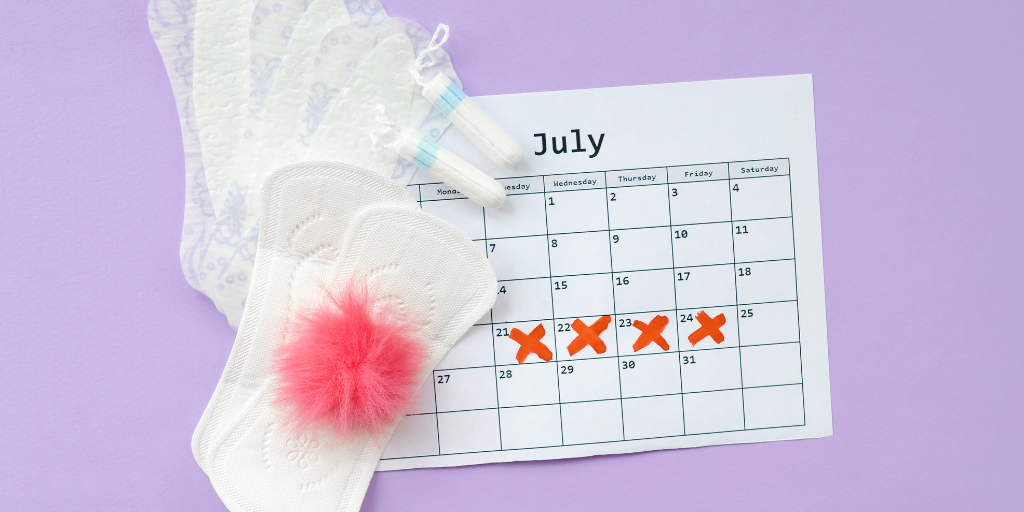
You've had your period for thirty-odd years. You know its schedule, its mood, even its favourite day of the week to arrive. Then one month it shows up early, stays for nine days, and soaks through your pad during a meeting. You're sitting there with a cardigan tied around your waist, praying nobody stands up first.
If this sounds familiar, take a deep breath, sis. Perimenopause heavy periods are incredibly common, hardly anyone warns us about them, and you are not being dramatic. Let's talk about what's really going on, what's worth watching, and what you can do starting today.
Are Heavy Periods a Sign of Perimenopause?
Very often, yes. Everyone talks about hot flashes, but for many women the first clue that perimenopause has arrived is that the period starts misbehaving: shorter cycles, longer cycles, skipped months, and sometimes a flow that's much heavier than before. Clinicians estimate that around one in three women experience heavy menstrual bleeding at some point, and the years leading up to menopause are a common time for it to start.
Heavy or irregular bleeding can also come from other causes, such as fibroids, polyps, thyroid issues, or other conditions. That's why we'll talk about when to get checked in a moment. First, the "why".
Why Do Periods Get Heavier in Perimenopause?
Here's where the knowledgeable-coach hat goes on, but I promise, plain language only.
1. Ovulation gets unreliable. In your younger years, ovulation happened like clockwork. In perimenopause, some months your ovaries don't release an egg at all (this is called an anovulatory cycle). No ovulation means no progesterone surge afterwards.
2. Progesterone is the "brake pedal" for your womb lining. Estrogen builds the lining; progesterone keeps it tidy and tells it when to shed. When progesterone is low or missing but estrogen keeps rising and falling, the lining can build up thicker than usual. When it finally lets go, it can be heavier, longer, and sometimes with clots.
3. Estrogen can spike before it declines. Contrary to what many think, estrogen doesn't just drift gently downward. In early perimenopause it can swing higher than normal at times, which is another reason the lining can get thick and the flow can feel like a monsoon.
4. Other things can add to it. Fibroids and polyps are common in midlife and can make bleeding heavier. Stress, poor sleep, and thyroid changes can also nudge your cycle off course. This is exactly why a heavy-flow pattern deserves a proper check, not just "tahan lah."
How Heavy Is Too Heavy? When to See a Doctor
This is the most important section of the whole post, so please read it twice. Heavy periods are common, but you should not just put up with them. Please book a visit with your doctor if you notice any of these:
You're changing a pad or tampon every 1 to 2 hours
Your period lasts longer than 7 days
You pass clots larger than a 10 sen coin
You bleed through to your clothes or bedsheets, or need double protection regularly
You're skipping work, exercise, or social plans because of your period
You feel very tired, breathless, dizzy, or look pale (these can be signs of low iron)
You bleed between periods, after sex, or after you've gone a full 12 months without a period
Your doctor can check your iron levels and thyroid, and may arrange an ultrasound or other tests to look for fibroids, polyps, or other causes. Bleeding after 12 months of no periods always needs to be checked promptly. Medical options exist and a conversation with your doctor is a smart, not scary, step. Everything below is lifestyle and food support that sits alongside medical care, never instead of it.
The Hidden Cost of Heavy Periods: Iron and Energy
Here's what women often miss: heavy bleeding drains your iron stores. Low iron can leave you feeling flat, foggy, breathless on the stairs, and craving your bed by 3pm. And because perimenopause already comes with its own tiredness, brain fog, and sleepless nights, many women blame hormones alone and never think about iron.
If your periods have been heavy and you're exhausted, ask your doctor for a blood test, including ferritin (your iron storage marker). Please don't start high-dose iron supplements on a guess. Too much iron isn't good for everybody, so test first and follow your doctor's advice.
Food-First Habits to Support You Through Heavy Periods
1. Eat iron-rich foods, plant-powered style
Plant sources of iron include tempeh, tofu, lentils, chickpeas, edamame, pumpkin seeds, dark leafy greens (kangkung, bayam), and dried fruit. Plant iron is absorbed less easily than iron from meat, so pair it with vitamin C: squeeze calamansi or lime over your greens, or have a few slices of papaya or guava with your meal. If you eat fish or meat, those are lovely iron sources too.
2. Time your tea and coffee
Tea and coffee contain compounds that can reduce iron absorption when drunk with meals. You don't have to give up your teh tarik. Just enjoy it an hour or so away from your iron-rich meal.
3. Feed your gut and your estrogen balance with fibre
Fibre helps your body clear used-up estrogen through the gut. Aim for lots of vegetables, whole grains, beans, flaxseed, and fruit. Many women in my programme find that adding a daily spoonful of ground flaxseed and an extra serving of veg is an easy first step. Research on diet and menstrual bleeding is still developing, so think of this as supporting overall hormone health rather than a guaranteed fix.
4. Keep blood sugar steady
Wild blood sugar swings can add to hormone chaos and stress. Build meals around protein, fibre, and healthy fats, and try not to run on kuih and kopi alone.
5. Manage stress and protect sleep
Chronic stress and short sleep can make your whole cycle more erratic. Try five minutes of slow breathing (in for 4, out for 6), a regular bedtime, and a cool, dark bedroom. Small things, repeated daily, add up.
6. Track your cycle
Jot down your start dates, how many days it lasts, how many pads you use, and how you feel. Honestly, this is gold when you see your doctor. "Quite heavy" is vague; "9 days, 8 pads a day, clots on day 2" gets answers faster.
Where Menoplus Fits Into the Picture
This is the "my body is changing and I don't know what to do first" moment that Menoplus Shop was built for. Our M+ Balance is a plant-based, non-hormonal daily formula built around EstroG, designed to support your body through the ups and downs of the menopause transition as a whole, including mood, sleep, and everyday energy and comfort.
To be upfront: M+ Balance is not a treatment for heavy bleeding, anaemia, or any medical condition, and it won't replace a check-up or iron where your doctor recommends it. Think of it as one supportive piece of the bigger picture, alongside the food, sleep, stress, and medical care above. Small daily habits plus steady daily support is how many of the women I coach start feeling more like themselves again.
Your Gentle Next Step
If your cycle has been giving you a surprise every month, you don't have to just pasang muka tebal and cope. Take our quick quiz at www.mplusmenopause.com to find out what your body actually needs, and have a look at M+ Balance to see if it feels like the right fit for you. And please, book that check-up if any of the red flags above sound like you. Jangan risau, you've got this, and you've got us.
Your body isn't breaking down. It's changing gears, and it deserves a little extra care while it does.