

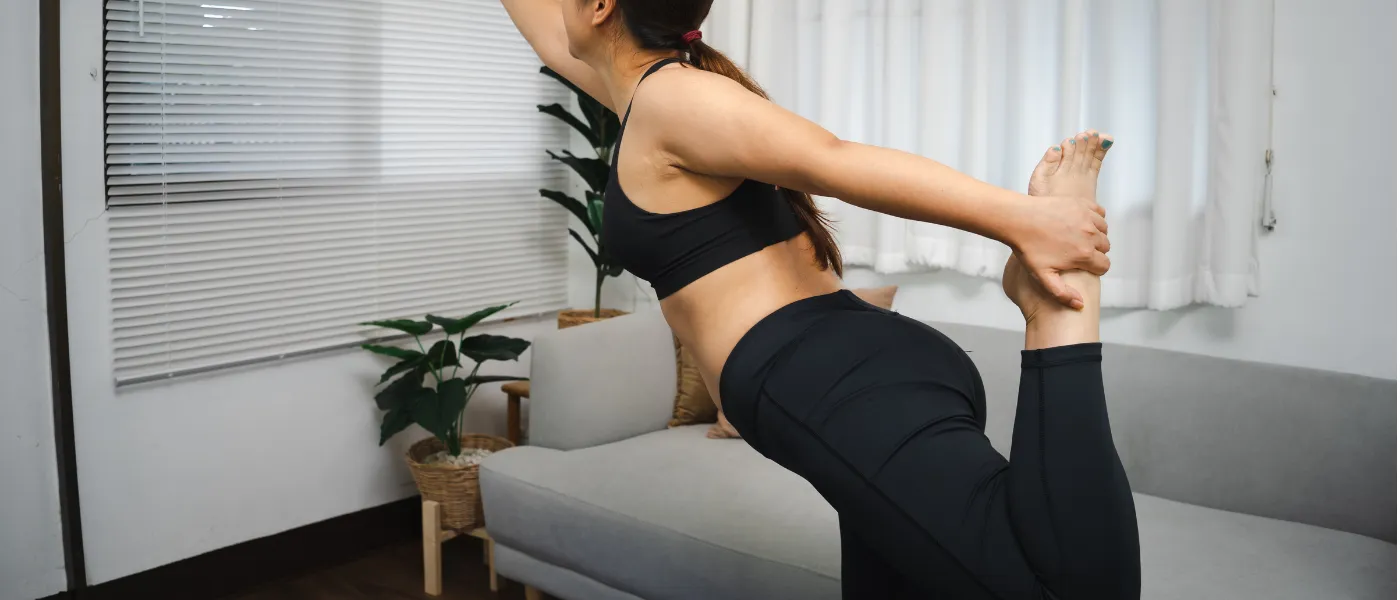
You didn't fall. You didn't overdo it at the gym (in fact, you haven't been to the gym in weeks, if we're being honest). And yet you woke up feeling like someone swapped your knees out for a rusty pair overnight. Getting out of bed sounds like a packet of crackers being stepped on. Your fingers are stiff until you've had your coffee. Badan rasa macam dah 80 tahun, padahal baru je nak masuk 50 — the body feels 80, even though you're barely into your 50s.
If this is you, first: you are not falling apart. Second: you're not imagining it, and you're definitely not alone. Joint pain and stiffness is one of the most common — and most dismissed — symptoms of the menopause transition. It even has a name now among researchers: the musculoskeletal syndrome of menopause. Some studies suggest over 70% of women experience some form of it during this stage of life. So if your joints have been filing complaints lately, they've got a lot of company.
Wait, Menopause Affects Joints Too?
Most of us are braced for hot flashes, mood swings, maybe some sleep chaos. Nobody warns you that your knees, hips, hands, and shoulders might join the conversation too. But it makes complete sense once you understand what estrogen actually does in the body — because it turns out estrogen isn't just about periods and hot flashes. It has receptors all over your muscles, bones, joints, tendons, and ligaments, and it plays an active, protective role in keeping all of that tissue functioning smoothly.
When estrogen starts its perimenopausal rollercoaster — dropping, spiking, dropping again — your joints feel the turbulence directly, right along with everything else.
What's Actually Happening in Your Joints (The Science, Made Simple)
Here's the plain-language version of what researchers are finding: estrogen has natural anti-inflammatory properties, and it helps maintain cartilage, joint lubrication, and the collagen that keeps your connective tissue springy and resilient. As estrogen declines, several things start happening at once:
Inflammation creeps up
Lower estrogen is linked to higher levels of inflammatory markers (cytokines) circulating in the body. Joint tissue is especially sensitive to this — more inflammation generally means more soreness, more stiffness, more of that "creaky on cold mornings" feeling.
Cartilage and collagen take a hit
Collagen is the structural protein that keeps cartilage cushioned and joints moving smoothly. Estrogen supports collagen production; when it drops, collagen turnover slows, and cartilage can start to thin faster than it used to.
Muscle mass declines
Less muscle around a joint means less natural shock absorption and support — so the joint itself takes on more of the load, especially in weight-bearing areas like knees and hips.
Joint fluid changes
Some women notice their joints feel drier or less "lubricated" — this tracks with estrogen's role in maintaining the fluid that keeps joints gliding rather than grinding.
Put it all together, and you get what so many women describe: new stiffness in the morning, achiness in the hands, knees that complain going up and down stairs, and a general sense that their joints just aren't as forgiving as they used to be.
Kenapa Ia Selalu Rasa Lagi Teruk Waktu Pagi
Ever notice it's worse first thing in the morning, then eases up once you're moving? That's normal — joint fluid needs movement to circulate and "warm up," and overnight stiffness is one of the classic signs of hormone-related joint changes rather than, say, an injury. It doesn't mean anything is wrong with you. It means your joints want you to move, gently, before you ask them to do anything dramatic.
What Actually Helps (Practical, Not Painful)
The good news: this is one of the more responsive menopause symptoms when it comes to lifestyle and nutrition. You're not stuck with it.
Feed your joints anti-inflammatory fats
Omega-3 fatty acids are some of the best-researched nutrients for joint comfort. A 2020 study found postmenopausal women taking around 1,000mg of omega-3s daily for 12 weeks reported reduced joint pain and stiffness, and a broader meta-analysis found omega-3 supplementation meaningfully reduced joint pain scores and morning stiffness. If fish isn't your thing (or you're plant-based), algae-derived omega-3s, walnuts, chia, and flaxseed all count.
Don't skip protein
Since muscle loss is part of what's driving extra load onto your joints, keeping muscle mass up matters. A palm-sized portion of protein at each meal — tofu, tempeh, fish, eggs, legumes — helps preserve the muscle that's quietly protecting your knees and hips.
Move — even when it's the last thing you feel like doing
Counterintuitively, gentle, consistent movement is one of the best things for stiff joints. Walking, swimming, and light resistance training help joint fluid circulate and keep supporting muscles strong. You don't need to "push through pain" — you just need to keep moving regularly, even in small amounts.
Consider plant-based anti-inflammatory support
Turmeric (curcumin), ginger, and green tea polyphenols all have research behind their anti-inflammatory effects, and they're an easy, food-first way to support your body through this transition without reaching for anything harsh.
Watch the inflammatory triggers
Highly processed foods, excess sugar, and alcohol can all nudge inflammation upward. You don't need to cut everything out overnight — just notice patterns. Many women find their joints genuinely feel better within a few weeks of dialing these back.
A Client Story: It Wasn't "Just Getting Older"
One of our Hormone Reset clients, a woman in her late 40s, came to us convinced her achy knees and stiff hands were simply "what happens" as you age — something to grit your teeth through. Once we looked at her plate, her omega-3 intake was almost nonexistent, protein was inconsistent, and she'd quietly stopped moving much at all because moving hurt. We didn't hand her a punishing new regimen — we added a daily plant-based omega-3, rebuilt her protein at each meal, and got her walking gently most days. Within a few weeks, she told us she'd forgotten what it felt like to get up from a chair without wincing first. It wasn't magic. It was just giving her joints what they'd been missing.
Your Joints Aren't Broken — They're Asking for Support
Menopause joint pain is real, common, and — importantly — very responsive to the right food-first support. It's not a sign that your body is "giving out." It's a sign that your hormones have shifted, and your joints need a bit more backup than they used to.
If your mornings have been starting with a creak instead of a stretch, this is exactly the kind of thing our plant-based formulas at Menoplus Shop were designed to support — nourishing your body through the hormonal shifts driving symptoms like this one, holistically and without harsh ingredients. Not sure where to start? Take our quick quiz at www.mplusmenopause.com to find out what your body actually needs right now.