

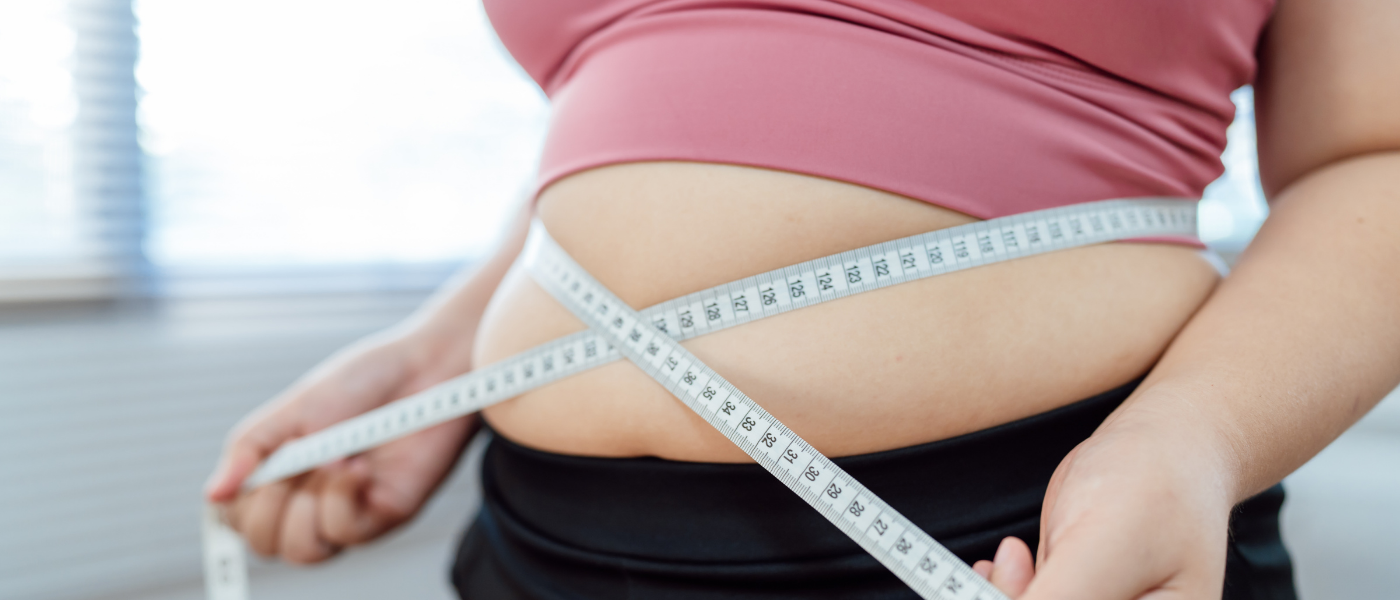
Let's start with a little scene. It's a week before a wedding dinner. You pull out the pants that fit you perfectly at last Raya. You haven't changed anything. Same food, same walks, same everything. And yet the button is fighting for its life, and the zip has simply given up on you.
Your arms look the same. Your legs look the same. But your tummy? It's like it moved in, unpacked, and decided to stay.
If this sounds familiar, first take a deep breath. You are not lazy, and you are not imagining it. Menopause belly fat is very real, it has very real causes, and the good news is there's a lot you can do about it. Let's go through it together, lah.
Is menopause belly fat real? (Spoiler: yes)
For years, women were told midlife weight gain is "just ageing." But a big long-term study called SWAN (the Study of Women's Health Across the Nation), which has followed thousands of women through midlife, tells a more specific story.
Researchers found that fat gain speeds up and muscle starts to drop about two years before your final period. That means it often begins in perimenopause, while you're still having periods and have no idea anything has started.
Even more interesting: visceral fat, the deeper fat that wraps around your organs, rose by about 8% a year in the two years before the final period, and kept going up by around 6% a year after.
So no, it's not all in your head. It's in your hormones.
Why does menopause cause belly fat? 5 sneaky reasons
There isn't one single villain here. It's more like a group of troublemakers all showing up at the same time.
1. Estrogen stops guarding your hips and thighs
In your younger years, estrogen tells your body to store fat on your hips, thighs and bottom. Hello, pear shape. As estrogen drops in perimenopause and menopause, that instruction fades, and fat starts heading for your middle instead. Pear becomes apple, often without any warning.
2. Your body handles sugar differently
Estrogen helps your cells listen to insulin, the hormone that moves sugar out of your blood. With less estrogen, your cells don't listen as well. So that same plate of nasi lemak, or the afternoon kuih with teh tarik, now raises your blood sugar more than it used to. And extra sugar in the blood loves to be stored around the waist.
3. Stress hormones love your tummy
Midlife is busy, kan? Work, kids (or teenagers, which is a whole other level), ageing parents, the house, the bills. All of that keeps cortisol, your main stress hormone, running high. Cortisol pushes up blood sugar, makes you crave quick comfort food, and encourages fat to settle around your middle. Estrogen used to help calm your stress response, but now it's not doing that job as well.
4. Those 2am or 3am wake-ups
Sleep problems are super common in perimenopause and after menopause. And poor sleep messes with your hunger hormones. You make more of the one that says "I'm hungry" and less of the one that says "I'm full." So the next day you're tired, cranky and reaching for biscuits and coffee to survive. Your belly notices.
5. Muscle quietly slips away
Muscle is your body's best fat-burning engine. From the menopause transition onwards, women tend to lose muscle unless they actively work to keep it. Less muscle means a slower metabolism, so the same amount of food is now more easily stored as fat.
Image: Simple illustration of fat shifting from hips to waist. Alt text: "How menopause belly fat shifts from a pear shape to an apple shape"
Is it belly fat or just bloating? A quick check
Not every tummy is the same, and it helps to know what you're dealing with.
Flat in the morning, swollen by evening? That's usually bloating, not fat. Your gut needs some love.
Firm, tight belly above the belly button that's hard to pinch? This often points to more visceral fat, the type linked to blood sugar problems, fatty liver and heart health. The good news: this type often responds quite well to the right lifestyle changes.
Soft "pooch" below the belly button? This can be a mix of pinchable fat, a weak deep core or pelvic floor (very common after having babies), posture or bloating. Diet alone won't flatten this one. It needs gentle core work too, and no, that doesn't mean 100 crunches a day.
Try this today: grab a measuring tape. For Asian women, a waist of 80cm or more, or a waist that's more than half your height, is a more useful warning sign than the number on the scale.
Why crash diets and bootcamps backfire after 40
Here's the part that frustrates women the most. What worked at 30 often doesn't work at 45 or 60.
One of our clients, a lady in her early 60s, came to us after trying almost everything. Bootcamps. Slimming programs. Early mornings, sore muscles, strict meal plans. She gave each one her all, and her belly barely moved. She kept blaming herself.
But she wasn't short on discipline. She was doing the 30-year-old version of weight loss in a 60-something body. When she joined our 21-Day Belly Fat Reset, we didn't ask her to push harder. We focused on steadier blood sugar, enough protein, better sleep and less stress on her system. For the first time in years, things finally started to shift.
Why does pushing harder backfire? Eating very little tells your body it's under stress, so cortisol goes up and you lose precious muscle. Hours of intense cardio on top of a stressful life adds even more stress. And skipping meals while surviving on coffee brings blood sugar swings, cravings and worse sleep. It's not you. It's the strategy.
How to lose menopause belly fat: 7 things that actually work
You don't need a punishing diet. You need to work with your hormones, not against them. Here's where I'd start:
1. Put protein first
Aim for a palm-sized portion at every meal: eggs, fish, chicken, tofu, tempeh, lentils or beans. Protein keeps you full longer, steadies blood sugar and protects your muscle.
2. Eat your plate in the right order
Start with your vegetables and protein, then finish with your rice, noodles or roti. Same meal, gentler blood sugar spike. Easy win, right?
3. Lift something (yes, you!)
Two or three short strength sessions a week will do more for menopause belly fat than endless walking or cardio alone. Dumbbells, resistance bands or even squats while waiting for your rice to cook all count.
4. Protect your sleep like it's gold
Keep a regular bedtime, put the phone away an hour before bed and stop caffeine after lunch. If hot flashes or night sweats are waking you up, that's worth addressing too, because better sleep makes everything else easier.
5. Give your stress somewhere to go
Five minutes of slow breathing, a short walk after lunch, a stretch before bed, saying "no" to one extra thing this week. Small habits, but your cortisol notices.
6. Be honest about alcohol
That glass of wine to "relax" hits your blood sugar, your sleep and your belly all at once. You don't have to give it up forever, but notice how your body feels with less.
7. Measure your waist, not just your weight
Many women lose centimetres before the scale moves. Measure once a week, same time, same spot. Don't give up before you see the win!
Image: Balanced Malaysian-style plate with vegetables, grilled fish and a small portion of rice. Alt text: "Balanced plate to help reduce menopause belly fat with protein, vegetables and rice"
Where plant-based support fits in
Let me be really honest with you here: no supplement will melt belly fat on its own. Anyone who promises that is selling a dream.
But here's what I see again and again with women in midlife. When hot flashes, night sweats and broken sleep are running the show, it's very hard to stick with good habits. You're exhausted, stressed and craving sugar. Everything feels harder.
That's why we created M+ Balance. It's a plant-based supplement made with EstroG-100®, a blend of three herbal extracts traditionally used in Chinese medicine. In clinical studies, EstroG-100® has been shown to help ease common menopause symptoms such as hot flashes, sleep disturbances and fatigue, and it does this without being a hormone.
Think of it as support for the symptoms that make healthy habits so hard to keep. When you sleep better and feel more like yourself, the protein-first meals, the strength training and the calmer evenings become much easier to stick with. That's where the real belly change happens.
When to see your doctor
Most menopause belly changes come from hormones and lifestyle. But please don't brush everything off as "just menopause." See your doctor if you notice:
A hard lump, or swelling on one side of your tummy
Your belly growing quickly without other weight gain
Bloating most days for three weeks or more, especially with feeling full quickly, pelvic pain or changes in how you pee
These are worth getting checked, just to be safe.
The bottom line on menopause belly fat
Menopause belly fat isn't a willpower problem. It comes from changes in your hormones, blood sugar, stress, sleep and muscle, and you can work on every single one of them.
The women who get the best results aren't the ones who try the hardest. They're the ones who finally stop fighting their body and start working with it.
If the sleepless nights, hot flashes and constant tiredness are making it hard to look after yourself, this is exactly why we created M+ Balance. Have a look at www.mplusmenopause.com and see if it's right for you. Not sure where to start? Take our quick quiz on the site to find out what your body actually needs right now.
P.S. Want to go deeper into belly fat? Join my FREE webinar, where I walk you through exactly why belly fat shows up in midlife and the practical steps to shift it. Save your seat here: https://resetmyhormone.com/