

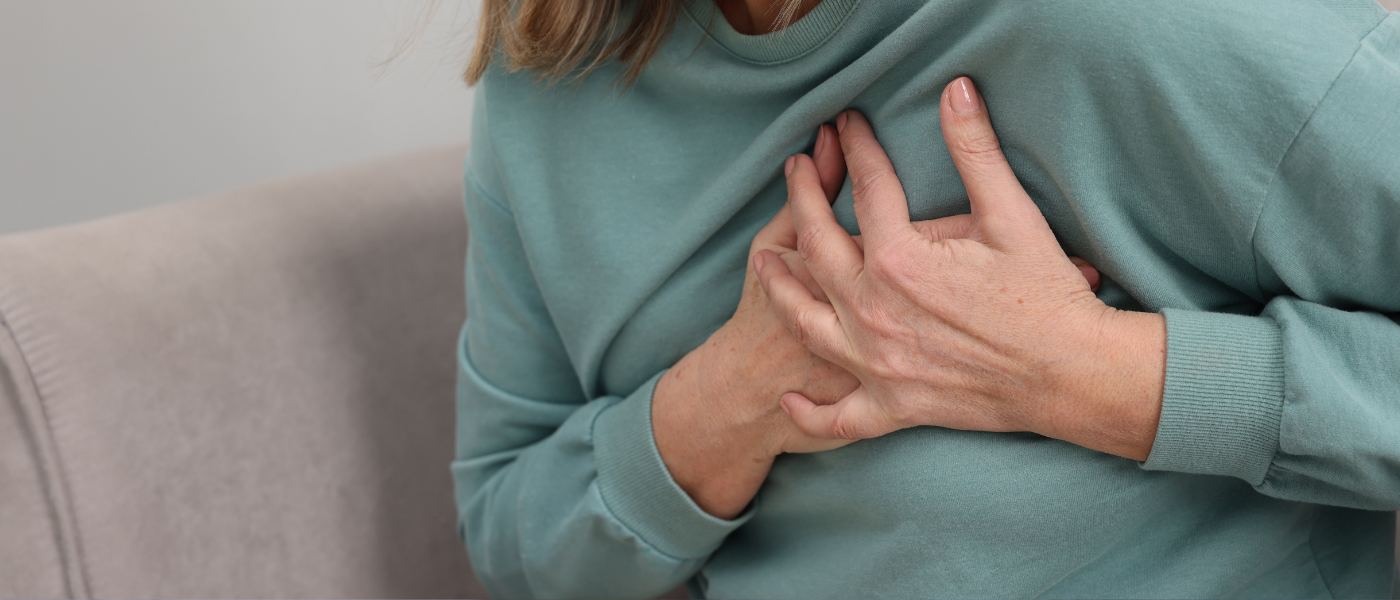
Picture this: you're sitting on the sofa, doing absolutely nothing exciting — not even watching a suspenseful drama, just scrolling your phone — and suddenly your heart starts pounding like you just ran up three flights of stairs. No warning, no reason. Just thump-thump-thump, and now you're googling "am I having a heart attack" at 11pm.
Kalau you've been there, you're not being dramatic, and you're definitely not alone. Heart palpitations — that fluttering, racing, or skipped-beat feeling — are one of the more surprising and unsettling symptoms of perimenopause. Nobody warns you about this one. You're braced for hot flashes and mood swings, but your heart deciding to do its own thing? That one catches most women off guard.
Let's talk about why it happens, when it's nothing to worry about, and what you can actually do to feel calmer — in your heart and in your head.
Wait, is this actually a perimenopause thing?
Yes — genuinely, yes. This isn't something you're imagining or overreacting to. Research estimates that 20 to 42% of women in perimenopause experience heart palpitations, and that number climbs even higher after menopause. One survey on menopause symptoms found that heart palpitations were one of the symptoms women were least expecting — which is exactly why it feels so alarming when it shows up.
Here's what's actually going on: estrogen doesn't just affect your ovaries — it also plays a role in regulating your heart's electrical activity and how your nervous system responds to stress. As estrogen starts its unpredictable rise-and-fall during perimenopause (think of it less like a slow decline and more like a rollercoaster with no seatbelt), your heart can become more sensitive to those hormonal swings. The result: it beats a little too hard, a little too fast, or seems to skip a beat altogether.
Palpitations also love to show up alongside hot flashes — makes sense, since both are tied to the same nervous system response. So if you notice your heart racing right as a hot flash hits, that's not a coincidence.
What else could be making it worse?
Hormones are often the main character here, but they're rarely acting alone. A few common co-stars that can make palpitations more frequent or intense:
Caffeine — that afternoon coffee might be hitting differently these days
Alcohol — even one glass of wine can set things off for some women
Stress and anxiety — and let's be honest, perimenopause itself is stressful, so this becomes a bit of a loop
Poor sleep — which, ironically, palpitations can also disrupt
Dehydration
Thyroid changes — worth ruling out with your doctor, since thyroid issues can mimic or worsen this symptom
This is usually where I remind my clients: your body isn't malfunctioning. It's adjusting. That doesn't mean you have to just put up with it — it means there's usually something you can actually do about it.
When should you actually worry?
Most of the time, perimenopause-related palpitations are harmless — uncomfortable and unsettling, but not dangerous. That said, your heart deserves to be taken seriously, so please see a doctor if palpitations come with:
Chest pain or pressure
Shortness of breath
Dizziness or fainting
Palpitations that last a long time or keep recurring frequently
This isn't about scaring you — it's the opposite, actually. Getting it checked once means you can stop wondering every time it happens, and just focus on feeling better. Perimenopause is also a good natural checkpoint to get your overall heart health reviewed with your doctor, since cardiovascular risk does shift during this life stage.
What actually helps
Once anything serious has been ruled out, there's a lot within your control:
Track your triggers. A simple symptom journal — noting when palpitations happen alongside caffeine, alcohol, poor sleep, or stress — helps you spot your personal patterns fast.
Steady your blood sugar. Blood sugar crashes can trigger adrenaline spikes, which your heart feels immediately. Regular, balanced meals with protein and fibre help keep things steady.
Prioritise sleep and hydration. Both directly calm the nervous system that's driving a lot of this.
Build in real stress recovery — not just "try to relax," but actual practices: breathwork, short walks, or simply a few minutes of doing absolutely nothing on purpose.
Support your hormones holistically. Since estrogen fluctuation is often the root trigger, working on hormone balance overall — through food, lifestyle, and targeted natural support — tends to ease palpitations along with the rest of the perimenopause symptom list, not just this one in isolation.
This is exactly the kind of "many small things pointing at one root cause" pattern I see constantly in my coaching practice — a client comes in about one symptom, and once we get her hormones more balanced overall, three or four other things quietly improve alongside it, palpitations included.
The bottom line
Aging is inevitable, but how you age is a choice — and that includes how you respond to something like this. You're not broken, and your heart isn't betraying you. It's just more sensitive to a hormonal shift that's temporary, even when it doesn't feel that way at 11pm. Once you understand what's driving it, palpitations become a lot less scary — and a lot more manageable.
If this is something you've been quietly dealing with (and maybe not mentioning to anyone), you deserve support that looks at your whole picture — hormones, stress, sleep, food — not just one symptom in isolation.
Not sure where to start? Take our quick quiz at mplusmenopause.com to find out what your body actually needs.